Ferrari SF90 Insurance Cost
Full coverage for a Ferrari SF90 costs about $2,090 a year ($174/month) by our estimate — ▲ +31% versus the average vehicle.
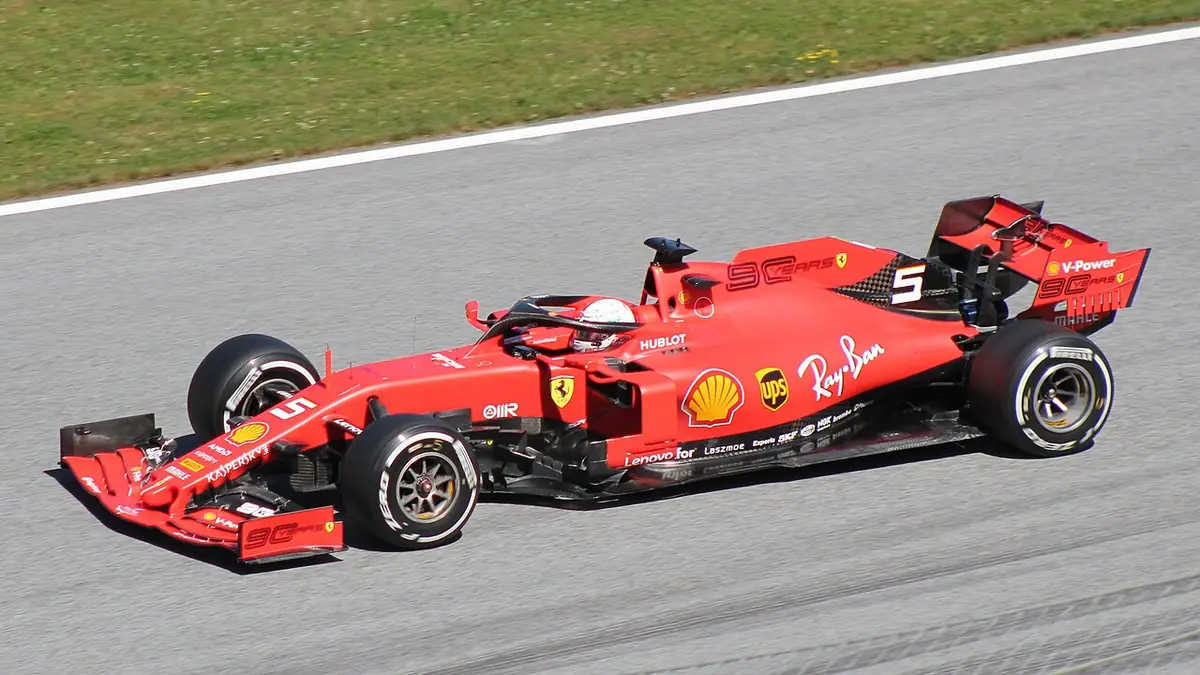
Ferrari SF90 insurance cost at a glance
These figures assume a driver in their 30s with a clean record, 7,500–12,000 miles a year, $500 deductibles and national-average base rates, for the 2025 model year. Our vehicle data covers the 2021–2025 model years of the Ferrari SF90, which is no longer in production.
| Coverage level | What it includes | Per year | Per month | Typical range |
|---|---|---|---|---|
| State minimum liability | Only the liability (and PIP/UM where required) limits your state mandates. No coverage for your own car. | $665 | $55 | $545–$780 |
| Standard liability (100/300/100) | Higher liability limits plus uninsured motorist coverage. Still no coverage for damage to your own car. | $960 | $80 | $790–$1,135 |
| Full coverage | Standard liability plus collision and comprehensive, typically required on a financed or leased car. | $2,090 | $174 | $1,715–$2,465 |
What drives the cost of insuring a Ferrari SF90
HLDI does not publish loss results for the Ferrari SF90, so our estimate uses the typical losses of its segment (Luxury sports car): 1.08× average for liability, 1.85× for collision and 1.60× for comprehensive.
- Repair and parts costs: Luxury sports car from a luxury brand — premium parts, sensors and labor rates raise collision claims.
- Recalls & complaints: 2 NHTSA recall campaigns and 0 owner complaints across its latest three model years. Recalls don't change premiums directly, but open recalls should be fixed.
Ferrari SF90 trims and configurations (2025)
Higher trims with bigger engines, all-wheel drive or more technology usually cost more to repair or replace, which raises collision and comprehensive premiums.
| Configuration | Drive | Engine | MPG (comb.) |
|---|---|---|---|
| SF90 Spider | AWD | 3.9L 8-cyl Turbo Plug-in Hybrid | 17 |
| SF90 XX Spider | AWD | 3.9L 8-cyl Turbo Plug-in Hybrid | 17 |
| SF90 XX Stradale | AWD | 3.9L 8-cyl Turbo Plug-in Hybrid | 17 |
Ferrari SF90 insurance cost by model year
Older model years cost less to insure for full coverage because the car is worth less, so collision and comprehensive payouts are smaller. Liability costs stay about the same.
| Model year | Engines | Drive | MPG | Est. full / yr |
|---|---|---|---|---|
| 2025 | 3.9L 8-cyl Turbo Plug-in Hybrid | AWD | 17 | $2,090 |
| 2024 | 3.9L 8-cyl Turbo Plug-in Hybrid | AWD | 17–18 | $2,035 |
| 2023 | 3.9L 8-cyl Turbo Plug-in Hybrid | AWD | 17–18 | $1,975 |
| 2022 | 3.9L 8-cyl Turbo Plug-in Hybrid | AWD | 17–18 | $1,920 |
| 2021 | 3.9L 8-cyl Turbo Plug-in Hybrid | AWD | 18 | $1,865 |
Ferrari SF90 insurance cost by state
The same car can cost very different amounts to insure depending on where it is garaged. Select a state for its rules and city-level costs.
| State | Full coverage | Minimum | vs. national |
|---|---|---|---|
| Alabama | $1,865 | $520 | −11% |
| Alaska | $1,850 | $675 | −11% |
| Arizona | $2,170 | $715 | +4% |
| Arkansas | $1,910 | $485 | −9% |
| California | $2,105 | $620 | +1% |
| Colorado | $2,390 | $705 | +14% |
| Connecticut | $2,175 | $770 | +4% |
| Delaware | $2,235 | $865 | +7% |
| District of Columbia | $2,665 | $800 | +28% |
| Florida | $2,815 | $1,165 | +35% |
| Georgia | $2,490 | $940 | +19% |
| Hawaii | $1,480 | $470 | −29% |
| Idaho | $1,430 | $435 | −32% |
| Illinois | $1,840 | $540 | −12% |
| Indiana | $1,510 | $435 | −28% |
| Iowa | $1,485 | $335 | −29% |
| Kansas | $1,725 | $435 | −17% |
| Kentucky | $1,745 | $570 | −17% |
| Louisiana | $2,860 | $855 | +37% |
| Maine | $1,360 | $460 | −35% |
| Maryland | $2,320 | $815 | +11% |
| Massachusetts | $2,070 | $640 | −1% |
| Michigan | $2,305 | $825 | +10% |
| Minnesota | $1,780 | $510 | −15% |
| Mississippi | $2,035 | $575 | −3% |
| Missouri | $1,925 | $555 | −8% |
| Montana | $1,730 | $425 | −17% |
| Nebraska | $1,730 | $435 | −17% |
| Nevada | $2,270 | $935 | +9% |
| New Hampshire | $1,520 | $435 | −27% |
| New Jersey | $2,420 | $1,010 | +16% |
| New Mexico | $1,895 | $560 | −9% |
| New York | $2,715 | $1,005 | +30% |
| North Carolina | $1,630 | $485 | −22% |
| North Dakota | $1,420 | $300 | −32% |
| Ohio | $1,520 | $435 | −27% |
| Oklahoma | $1,940 | $510 | −7% |
| Oregon | $1,815 | $675 | −13% |
| Pennsylvania | $1,875 | $460 | −10% |
| Rhode Island | $2,465 | $885 | +18% |
| South Carolina | $2,165 | $790 | +4% |
| South Dakota | $1,700 | $340 | −19% |
| Tennessee | $1,785 | $490 | −15% |
| Texas | $2,515 | $745 | +20% |
| Utah | $1,845 | $705 | −12% |
| Vermont | $1,425 | $345 | −32% |
| Virginia | $1,800 | $675 | −14% |
| Washington | $1,775 | $635 | −15% |
| West Virginia | $1,800 | $470 | −14% |
| Wisconsin | $1,460 | $400 | −30% |
| Wyoming | $1,735 | $350 | −17% |
Ferrari SF90 insurance by driver profile
| Driver | Minimum | Standard | Full coverage | Full / month |
|---|---|---|---|---|
| Teen driver (18, own policy) | $1,825 | $2,645 | $5,745 | $479 |
| Young adult (22) | $1,060 | $1,540 | $3,340 | $278 |
| Adult in their 30s | $665 | $960 | $2,090 | $174 |
| Adult in their 50s | $610 | $885 | $1,920 | $160 |
| Senior (72) | $745 | $1,075 | $2,340 | $195 |
| 30s, one at-fault accident | $960 | $1,395 | $3,030 | $253 |
| 30s, DUI on record | $1,225 | $1,780 | $3,865 | $322 |
Ferrari SF90 vs. rivals
| Model | Full coverage / yr | HLDI collision | HLDI comprehensive | Comparison |
|---|---|---|---|---|
| Ferrari SF90 | $2,090 | — | — | — |
| Porsche 911 | $1,750 | 198 | 165 | — |
| BMW M4 | $4,260 | 549 | 278 | — |
| BMW M2 | $2,260 | 248 | 154 | — |
Estimate Ferrari SF90 insurance for your ZIP code
Runs in your browser — nothing you enter is stored or sent to insurers.
Other Ferrari models
- Amalfi $2,200/yr
- 12Cilindri $2,145/yr
- 296 $2,145/yr
- F80 $2,145/yr
- Purosangue $1,760/yr
- Roma $3,650/yr
- Daytona SP3 $2,090/yr
- 812 $2,035/yr
- F8 $1,975/yr
- Monza SP $1,975/yr
- Portofino $1,975/yr
- 488 $1,810/yr
- GTC4Lusso $1,810/yr
- California $1,700/yr
- F12berlinetta $1,645/yr
- LaFerrari $1,645/yr
- F60 America $1,585/yr
- FF $1,585/yr
- 458 $1,580/yr
- 599 $1,580/yr
- 612 Scaglietti $1,580/yr
- F430 $1,580/yr
- 360 $1,580/yr
- 575M $1,580/yr
Frequently asked questions
How much is insurance for a Ferrari SF90?
We estimate about $2,090 a year ($174 a month) for full coverage and $665 for state-minimum liability, for a driver in their 30s with a clean record at national-average rates. That is 31% more than the average vehicle.
Which state is cheapest to insure a Ferrari SF90?
Maine has the lowest estimate (about $1,360 a year for full coverage) and Louisiana the highest (about $2,860).
Is the Ferrari SF90 cheaper to insure than the Porsche 911?
By our estimate the Ferrari SF90 costs about $2,090 a year versus $1,810 for the Porsche 911, making the Porsche 911 cheaper to insure.
How much is Ferrari SF90 insurance for a teen driver?
An 18-year-old on their own full-coverage policy would pay about $5,745 a year at national-average rates by our estimate.
How we estimate this
We start from the state's average liability, collision and comprehensive premiums published by the NAIC, then apply a location factor (population density and commute time from the Census ACS, weather hazard scores from FEMA's National Risk Index), a vehicle factor (HLDI insurance-loss data where available, otherwise vehicle segment), and a driver-profile multiplier. Results are rounded ranges for comparison, not quotes. Read the full methodology.